When a property owner sees a tenant placement fee, it can be easy to think, “How much work can it really be to find a tenant?”
From the outside, the process can appear simple: advertise the property, show it to a few people, choose an applicant and sign a lease.
It’s not simply showing it to a couple of prospective tenants and then sending a lease to sign. In reality, placing a tenant involves a series of separate steps, many of which happen behind the scenes and add up quickly.
The following breaks down what typically happens from the moment a management agreement is signed through the day the new tenant receives the keys, and the time it takes a Property Manager to fill your property.

1. Onboarding a new Property and new Owner
Before anything can be done to list the property, The first step is getting the property and owner properly set up.
- Executing a management agreement
- Gathering ownership and contact information, property details, insurance information, keys and access instructions, and utility information, all of which are unique to reach property
- Documenting all the documents that were gathered into their property management software like Buildium, Yardi, or Appfolio
When the property manager is responsible for the intake, tracking, document review, and follow-up this adds a significant amount of time. All complicated by the fact that each property and owner is unique. There are very few standards in real estate.
Typical property-manager time: approximately 6-8 hours.
2. Perform a Market Analysis
Before putting a rental on the market, the manager needs to determine what the property should actually rent for.
A proper analysis considers comparable properties, location, bedrooms and bathrooms, square footage, condition, amenities, parking, pet policies, current inventory, days on market and whether competing.
Typical property-manager time: approximately 1-1.5 hours.
3. Coordinate Make-Ready Repairs
This can vary drastically by each property.
The manager has to inspect the property, create a punch list, determine which items are necessary versus optional, obtain estimates, communicate the recommendations to the owner, obtain approval, schedule vendors, coordinate the order of the work and perform a final quality-control inspection.
While the property manager isn’t the one doing the work, managing all these moving parts is a time-consuming process, even for the most seasoned property managers.
Once the work is completed, the manager still needs to do a final inspection and document the repairs.
Finally, after everything is good to go, the manager needs to complete the proper accounting of these repairs and get vendors paid.
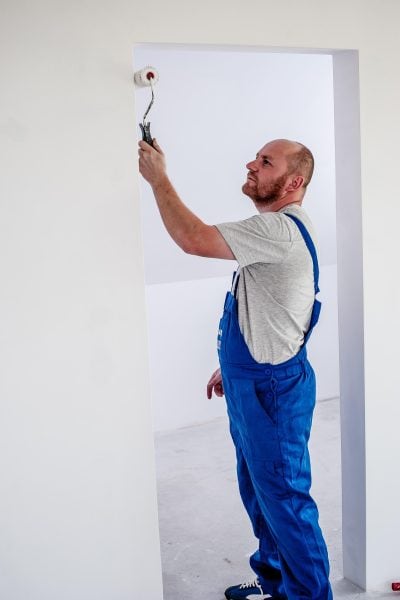
Current industry benchmarks generally put a standard make-ready at roughly 3–7 calendar days, with properties needing more extensive work done can take a while.
Typical property-manager time: approximately 2-4 hours.
4. Photograph and Listing the Rental Property
To get the property ready to list there is a new things that need to happen.
When onboarding a new client, they often don’t have access to photos, so this needs to be done.
A manager to travel out to the property and take photos can expect to spend 1-2 hours. If the manager decides to edit these photos, this can add additional time.
Once the photos are taken then it’s time to list the property.
Next is listing the property. Every property needs a description, photographs, availability dates, lease terms, pet and utility policies, application requirements. This could add another 1-2 hours of time for the manager.
Typical property-manager time: approximately 2-4 hours.
5. Manage Leads and Prospective Tenants
Once the property is advertised, the manager’s job changes from preparing the property to managing a pipeline of potential tenants. This means monitoring inquiries from rental websites, email and phone, answering questions, providing information about rent and requirements, pre-qualifying prospects, and answering questions.
To maximize exposure for the property, this process is often managed across multiple websites like Zillow & Redfin
Typical property-manager time: approximately 1-3 hours.
Although high lead volume of leads can make this substantially higher.
6. Schedule and Perform Showings
Every showing requires more than the few minutes spent walking through the property. In fact, the actual showing of the property is the quickest part, with the average showing taking 10-15 minutes.
But when you start to add up all the other activities that account for the total time it adds up quick
But there are a lot more activities associated with just walking the property.
- Coordinating and confirming a mutally convenient time to show the property + .5 hour
- Travel time and waiting at the property + 1 hour
- Following up and additional questions + .5 hour
On average, a home will have 3-4 showings before a lease is signed. This doesn’t factor in the time spent by leasing agents in the event of a tenant no show.
Typical property-manager time: approximately 2-8 hours.
7. Screen Prospective Tenants
Tenant screening is one of the areas where the manager’s work carries a significant amount of responsibility, while also opening up the liability of risk if laws aren’t followed like Fair Housing & FCRA.
Once an applicant submits an application, the manager may need to review the application for completeness, verify income and employment, review rental history, order and evaluate credit and background reports, verify identity, contact references where appropriate and apply the property’s written qualification criteria consistently.
With some managers being more manual while others more automated.
Typical property-manager time: approximately 15 minutes-2 hours
8. Execute the Lease Agreement
Once an applicant has been approved, the property manager still has to turn the approval into a signed lease.
This generally means preparing the lease, entering the correct tenant names, rent amount, security deposit, lease dates, utility responsibilities, pet terms and other property-specific provisions, attaching required addenda and disclosures, reviewing the document for accuracy, sending it for signature, tracking outstanding signatures and confirming receipt of the required move-in funds.

A standardized lease makes this process more efficient, but it does not eliminate the need to check that the agreement accurately reflects the specific property and tenancy.
Typical property-manager time: approximately 30 minutes.
9. Moving the Tenant in & the Move-In Inspection
Before the tenant can move in, the manager may complete a room-by-room inspection, photograph or video the property’s condition, test appliances and fixtures, and confirm that the property is ready to move in. Because the completed inspection is retained as the baseline condition report for the tenancy, all of this needs to be documented into the system to protect the owner.
The manager will then meet the tenant at the property, perform a walk through and provide move-in documentation.
Typical property-manager time: approximately 1–2 hours.
The Part Owners Don't Always See
Viewed individually, none of these tasks necessarily looks enormous.
A listing may take minutes to publish. A showing may take 15 minutes. An inspection might take an hour. Signing a lease may take half an hour.
The problem is that tenant placement is the sum of all of them.
For a relatively straightforward single-family rental, the hands-on management time can easily reach the mid-teens to 20-plus hours, depending on how much onboarding is required, how many prospects inquire, how many showings are performed and whether repairs or complications arise.
The calendar timeline can be much longer because the manager is also waiting for vendors, applicants, screening reports, tenants that go through the entire process and don’t sign a lease, chasing down signatures and the tenant’s move-in date.
There is also work that does not show up neatly in a time sheet. A manager has to keep records, communicate with the owner, maintain consistent screening procedures, coordinate vendors, and make sure important steps do not fall through the cracks.